 3AM Marketer
Performance Max Asset Group AB Testing: 40-Bucket Rules
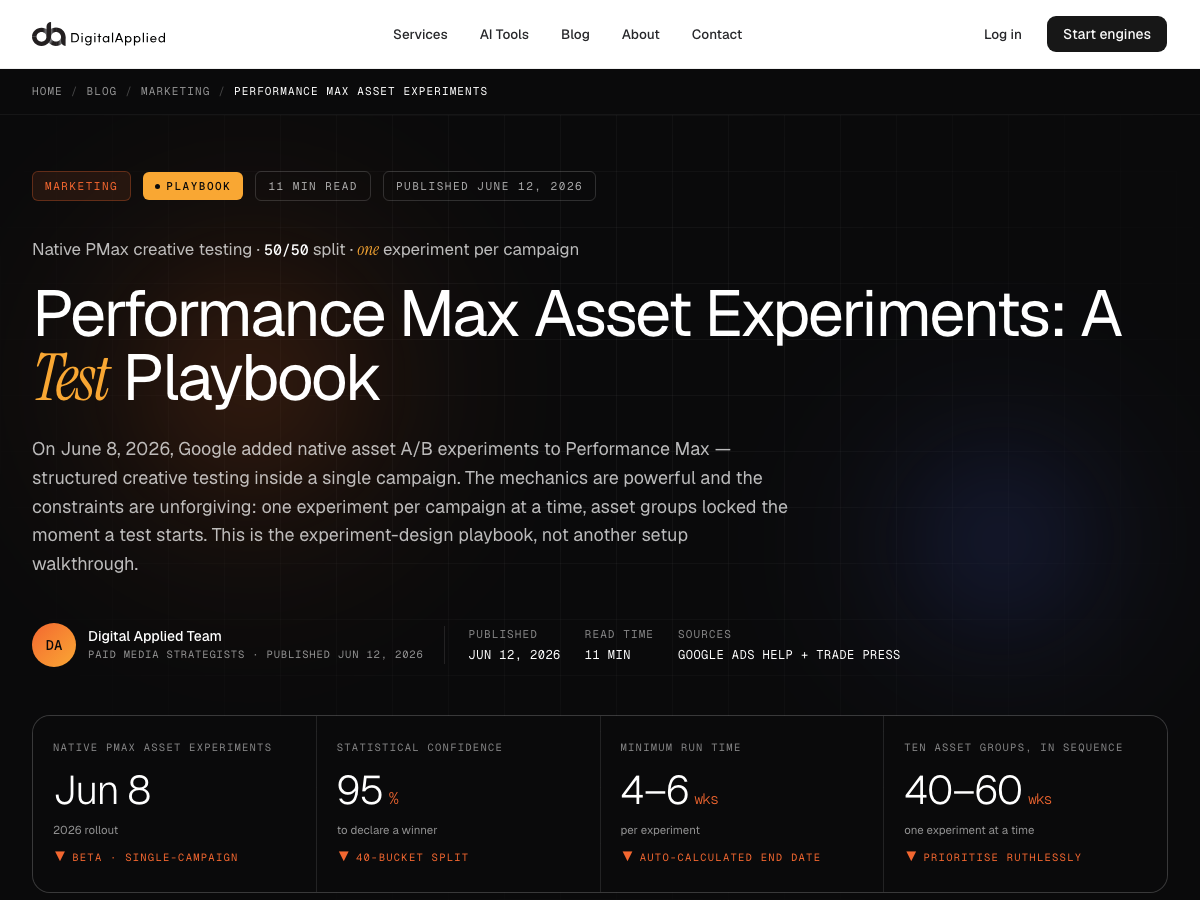
Google introduced native Performance Max asset A/B testing inside single campaigns on June 8, 2026, using a 40-bucket split architecture and locked asset groups.
Google introduced native asset A/B experiments inside a single Performance Max campaign on June 8, 2026, eliminating the requirement to clone separate campaigns to evaluate creative performance. This update followed a retail-only beta launched in October 2024 and an expansion across all Performance Max campaign types on January 9, 2026.1
Consolidation Beats Multi-Campaign Splitting
Splitting ad traffic across multiple single-asset-group campaigns restricts Smart Bidding from identifying conversions at target efficiency. When campaigns are fragmented, each instance attempts to achieve targets in isolation, driving up marginal cost-per-conversion relative to a consolidated account structure.2
Native asset experiments run both treatment and control arms inside a single campaign structure. This within-campaign configuration shortens the machine learning period compared to deploying a traditional two-campaign split.1
For testing priority, high-priority creative elements such as headlines, CTAs, and offer messaging carry an expected performance improvement potential of 20% to 30%, compared to 10% to 20% for description lines and 5% to 10% for display URLs.4
40-Bucket Allocation and Asset Group Locking
Native experiments divide campaign traffic into a 40-bucket split. Under standard 50/50 testing, Google Ads directs 20 buckets to the control assets and 20 buckets to the treatment arm. Advertisers seeking lower risk can select a 70/30 split, though shifting volume away from the treatment extends the time required to reach statistical significance.1
Common Assets sit outside the test boundaries. Google serves Common Assets to 100% of traffic across both arms to preserve identical baseline controls. The system enforces strict operational constraints: campaigns are limited to one active experiment at a time, and all asset groups lock immediately upon launch, prohibiting asset edits, additions, or removals.1
Conversion Volume and Runtime Realities
Every test requires a minimum run time of 4 to 6 weeks. High-volume accounts need 30 to 50 conversions per variant to obtain a statistically trustworthy read, whereas lower-volume accounts require 50 to 100 conversions per variant. Because campaigns allow only one experiment at a time, testing sequentially through 10 asset groups at 4 to 6 weeks per evaluation requires 40 to 60 weeks in total.1
Campaign Setup and Experiment Boundaries
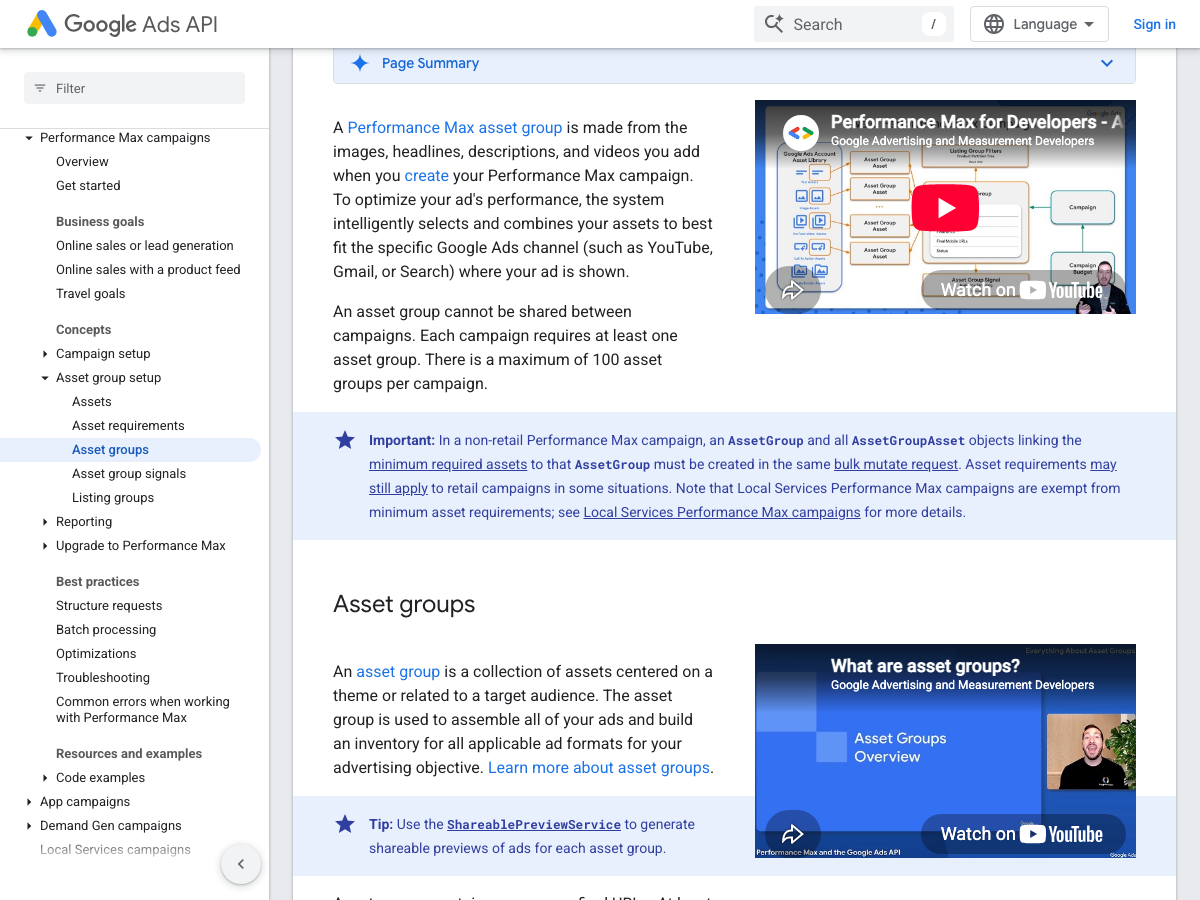
Advertisers configure tests through the unified Experiments page, which consolidates standard split experiments and conversion lift studies into a single interface. A single Performance Max campaign accommodates up to 100 asset groups and cannot share asset groups with other campaigns.13
Questions
How do I perform A/B testing in Google Ads for Performance Max assets?
Navigate to the unified Experiments page in Google Ads to configure a native asset experiment within your existing campaign. The system divides your traffic across a 40-bucket split, evaluating your control and treatment assets without requiring a separate campaign.
Can I edit an asset group while an experiment is active?
No. Asset groups are locked immediately upon the start of an experiment. You cannot add, edit, or remove any assets in the participating groups until the test concludes.