 3AM Marketer
Google Search Volatility October 2026 Hits 9.5 Rating
Semrush Sensor hit a 9.5 out of 10 volatility spike on October 27, 2026, following the September spam update and late October SERP churn.
Google Search volatility reached extreme levels in late October 2026, culminating on October 27 when the Semrush Sensor recorded a 9.5 out of 10 rating for US desktop search. This tracking surge followed weeks of turbulent rank shifts, multiple unconfirmed algorithm spikes, and search engine result page churn that persisted well after the official spam rollout concluded.12
The October 2026 search volatility timeline
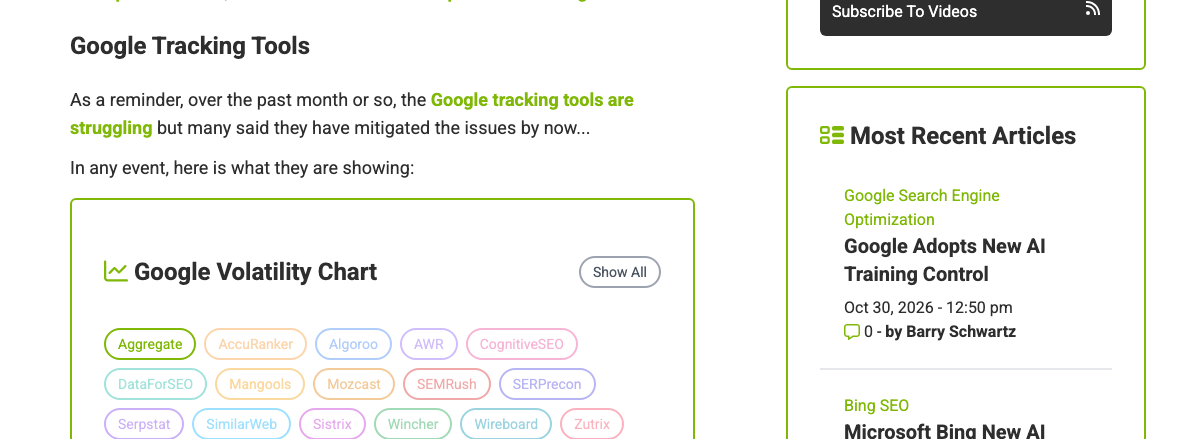
The foundation for October's instability began with the Google September 2026 spam update, which ran from September 24 at 12:00 pm ET until October 8 at 4:37 am ET. That update rolled out in three distinct volatility waves: September 25 through 27, September 30, and October 4 through 6.2
Rather than settling down after October 8, search tracking tools logged renewed disruptions. Unconfirmed Google Search ranking updates were reported on October 16, October 20, and October 21, 2026. Tracking tools then captured significant ranking volatility on Saturday, October 24, before the Semrush Sensor recorded its 9.5 out of 10 spike on October 27.12
Quantifying organic search result churn
Rank tracker volatility spikes reflect dramatic increases in result turnover on search result pages. Prior to September 13, 2026, only 0.17% of search results pages displayed swapped organic results. After September 13, that share jumped to 8.4%.1
The swap rate surged to a peak of 28.6% on September 29, 2026. While churn subsided from that high water mark, it remained elevated at 7.0% on October 18, 2026. Because swapped results are served to automated trackers rather than real searchers, as our report on rank tracking data poisoning explains, part of the volatility third-party rank trackers registered may not reflect what users saw.1
Diagnosing traffic drops amidst reporting delays
Diagnosing October traffic drops became complicated when the Page Indexing report in Google Search Console stopped updating. The report reportedly remained unrefreshed since approximately October 16, 2026, creating an information vacuum for webmasters investigating missing impressions.3
Despite delays in indexing status, the Performance report in Google Search Console remains generally more useful for understanding actual search traffic changes than rank tracking tools. Additionally, traffic swings may stem from surface-level experiments rather than core web rankings; on October 23, 2026, an observed test within Google Discover reportedly hindered users from opening source articles behind AI summaries.13
The case for inaction during search instability
Practitioners are advised against performing unnecessary content rewrites or technical changes based on unconfirmed algorithm speculation. Google specifically advises that webmasters wait a few weeks after implementing changes before analyzing their site in Search Console, ensuring data stability before drawing conclusions.13
Google also recommends that site owners avoid radical changes to pages that already perform well. Furthermore, Google explicitly notes that traffic sourced from Discover is less predictable or dependable when compared to keyword-driven search visits, meaning Discover drops should not be treated as systemic search penalties.1