 3AM Marketer
Google Quality Guidelines: The 4 Attributes Raters Evaluate
Google's helpful content guidance evaluates Main Content against human effort, originality, and brand trust rather than word count or automated churn.
An analysis of 1.8M URLs from Helpful Content updates revealed that losing sites held an average Domain Authority to Brand Authority ratio of 2:1, compared to 1.39 and 1.40 for winning and neutral sites. That authority gap highlights how automated systems devalue content churn and unearned link profiles that lack real-world brand interest.1
What Google defines as Main Content
Core documentation sets Main Content as the specific components that fulfill a page purpose, such as articles, calculators, tools, and videos. The Search Quality Evaluator Guidelines emphasize that quality of the main content is one of the most critical factors for assessing overall page quality.23
Google ranking systems work primarily at the page level using a variety of signals, while site-wide signals and classifiers also contribute. Alongside these page-level signals, Google's passage ranking system functions as an AI system that identifies individual sections or passages of a web page to determine relevance.4
The four attributes raters evaluate
Google uses its helpful content guidelines to train machine learning ranking models evaluated against human Quality Raters. Search quality raters have no control over how pages rank, and rater data is not used directly in Google ranking algorithms. Instead, the evaluations train algorithms to judge Main Content across four distinct evaluator attributes including Effort, Originality, Skill and Experience, and Accuracy.23
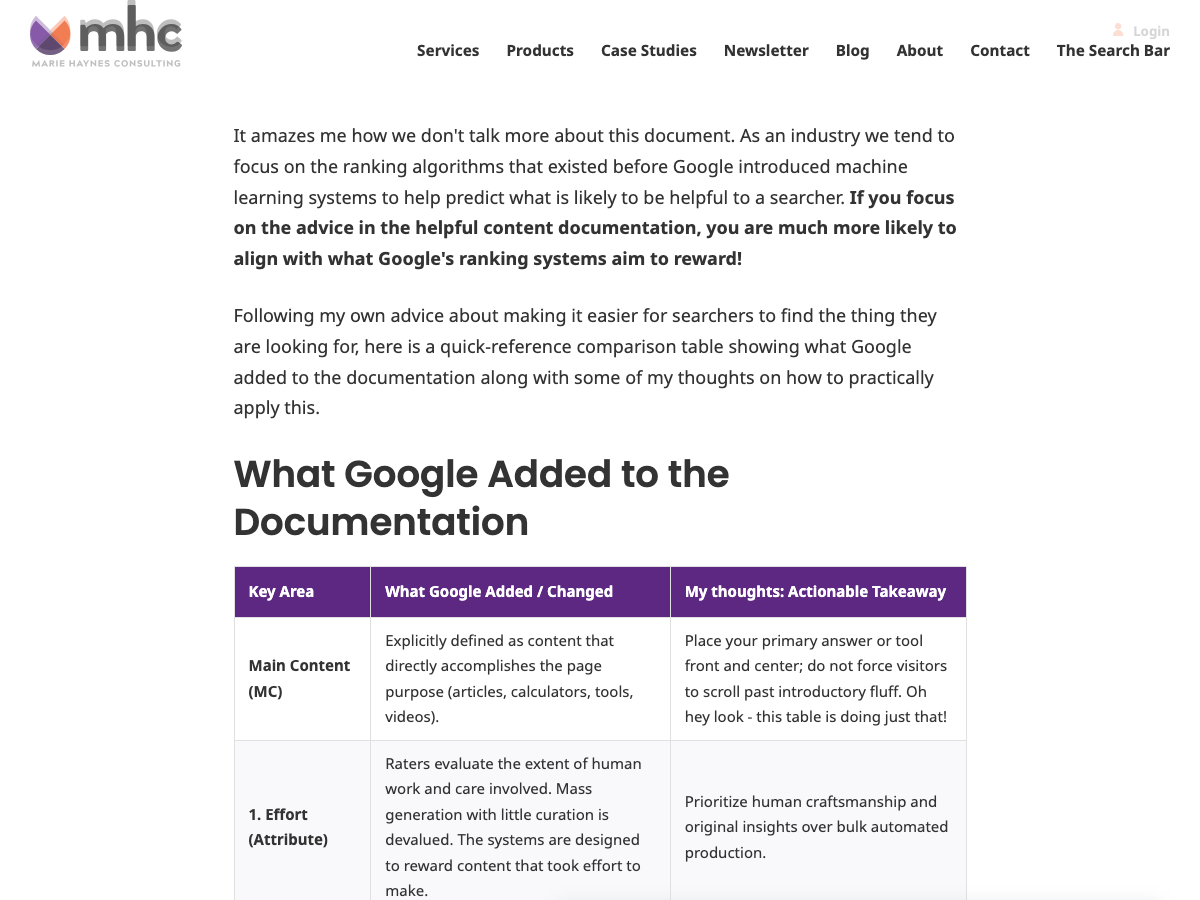
Under the Effort attribute, raters evaluate human work and care, ensuring mass generation with little curation is devalued. Originality requires unique perspectives, data, or testing not already available across search results. Skill and Experience evaluates whether content demonstrates subject-matter expertise for YMYL topics or authentic everyday lived experience. The Accuracy attribute sets a strict factual accuracy requirement, specifically cautioning against unreviewed AI hallucinations while flagging fake personas, fabricated bios, or misleading bylines as low quality.2
Word count, layout mechanics, and freshness
Google explicitly confirms that it does not have a preferred word count for web content. Adding a lot of new content or removing older content will not help search rankings overall by making a site seem fresh.3
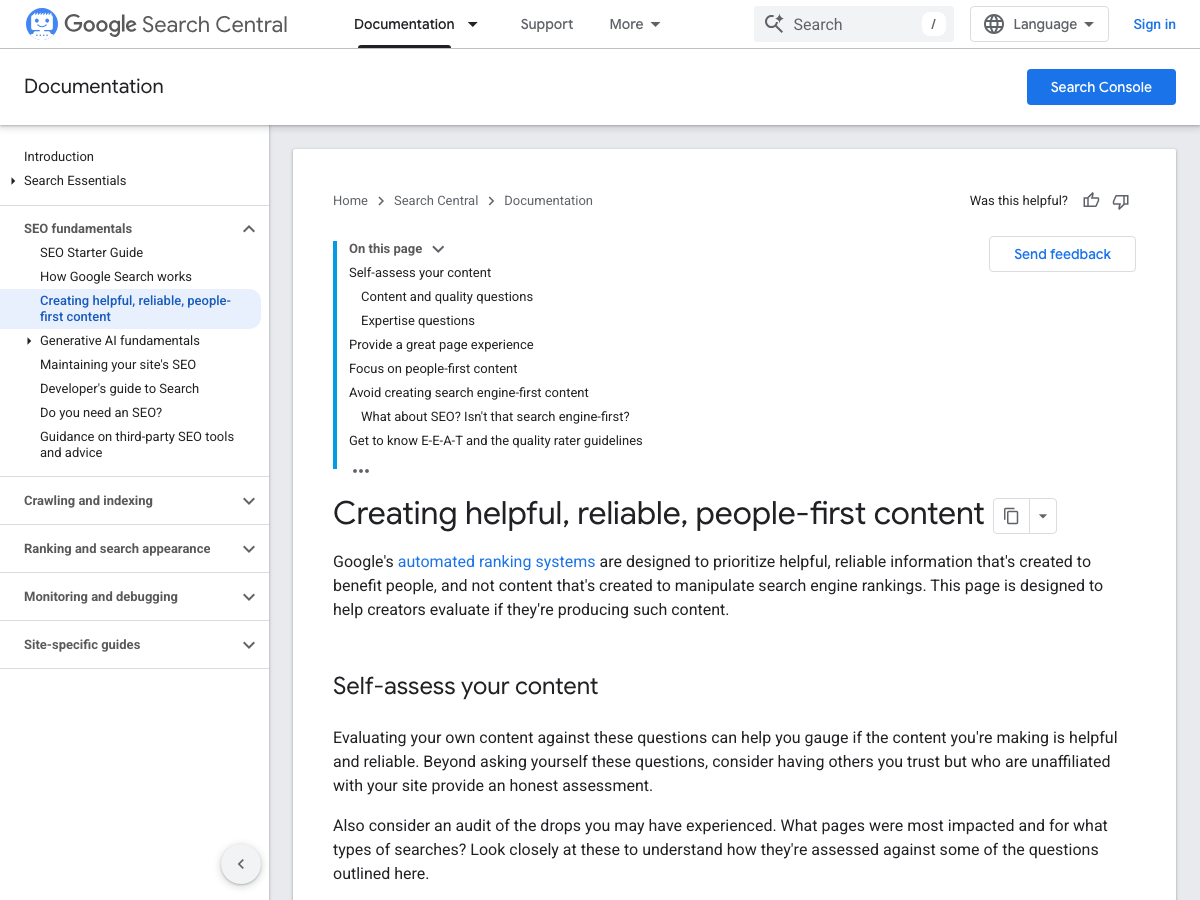
Google confirmed that tabs and accordions remain acceptable for layout cleanliness as long as content is accessible. For overall authority, trust is the most important aspect of the E-E-A-T framework, with every other attribute serving to support it.23
Prioritize human research and original testing over high-volume publishing workflows. Teams should audit whether their content provides substantial value when compared to other pages in search results, rather than relying on rapid content updates or fabricated author profiles.23