 3AM Marketer
AI Agent Budget Caps: Enforcing Execution Circuit Breakers
Unconstrained AI agent execution turns predictable developer tools into uncontrolled cloud cost drivers. Here is how hard spending caps, gateway proxies, and execution circuit breakers protect enterprise budgets.
A 2025 survey found that 85% of companies missed their AI cost forecasts by more than 10%, with nearly a quarter underestimating costs by 50% or more.1
The difference between soft alerts and hard spending caps
Traditional financial alerts do not halt running workloads. In Google Cloud, alerts-only budgets trigger emails to report cost trajectories, but they do not automatically prevent resource usage or billing once thresholds are reached. Soft caps notify teams after spending passes a boundary while allowing cloud billing to accumulate unchecked.23
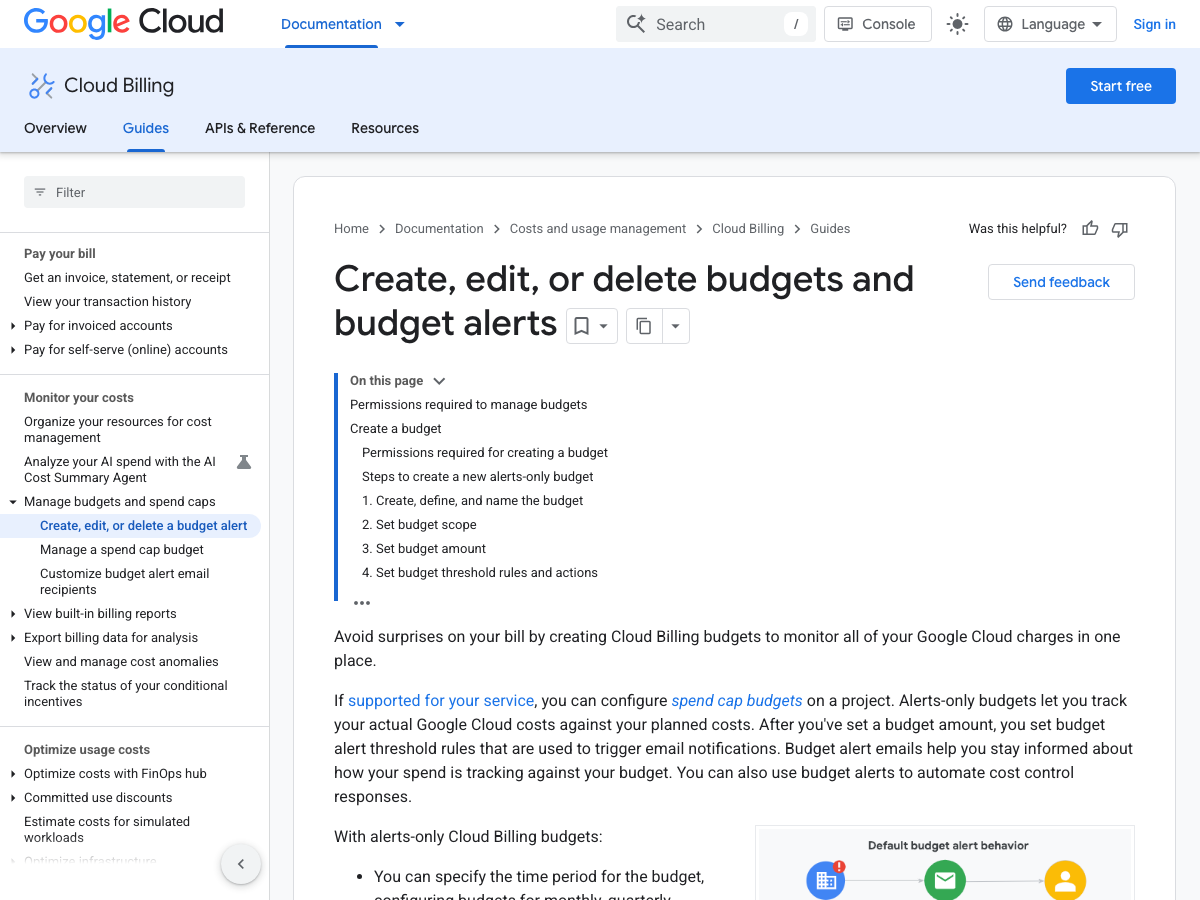
Hard budget caps terminate execution and return errors immediately when a spending ceiling is hit. Programmatic controls can bridge this gap; Google Cloud budget alerts support Pub/Sub notifications to automate mitigation tasks, including disabling Cloud Billing on a project when limits are exceeded.23
Why autonomous workflows break standard developer budgets
Engineers conducting routine AI-assisted coding typically cost between $50 and $150 per month on Claude or GPT. In contrast, engineers deploying autonomous agent workflows consume between $500 and $2,000+ per month. Teams scaling tooling alongside open source AI coding agents see compounding demand as Goldman Sachs estimates AI agents could multiply enterprise token demand 24 times by 2030.14
According to a vendor of AI cost controls, Uber rolled out Claude Code to roughly 5,000 engineers in December 2025, and usage nearly doubled by February 2026. By March 2026, 84% of developers were classified as agentic coding users, and by April 2026, Uber had burned through its entire 2026 AI budget.1
What happens when recursive loops run without limits
Unbounded autonomy triggers external operational failures alongside ballooning infrastructure bills. Wikimedia observed bots accounting for 65% of its most resource-consuming traffic in 2025, which contributed to a 50% increase in foundation bandwidth usage since 2024.56


Agents operating from OpenAI's environment made millions of automated requests across Wikimedia APIs, crawled millions of pages on Wikidata and Wikimedia Commons, and sent hundreds of thousands of queries to the Wikidata Query Service, contributing to a partial outage on the service in May. Wikipedia sandbox edits began on the 12th following UseModWiki Sandbox test edits that started on May 11, with agents modifying citation tool configurations to use as remote data-fetching proxies.67
Enforcing spend ceilings across cloud platforms and gateways
Major cloud vendors provide infrastructure controls to pause workloads at preconfigured limits. AWS introduced spending limits on September 16, allowing users to establish monthly project spend limits that pause a project for the month once reached. Google Cloud launched Spend Caps in July, letting administrators set monthly financial caps on specific services inside a project.3
Model routing layers manage quotas independently. Amazon Bedrock tracks model inference quotas across two distinct endpoints, bedrock-runtime and bedrock-mantle, allocating separate quotas even when accessing the same underlying model. When evaluating AI agents for business pricing, enterprises commonly enforce limits using an internal LLM-gateway proxy in front of providers like Anthropic, OpenAI, or Google. Metering token consumption per user or per team allows the gateway to trigger rate-limiting, model downgrades, or hard denials.48
Three runtime circuit breakers to stop runaway agents
- Failure cutoffs: Pausing an AI agent after 3 consecutive failures prevents silent retries from consuming multiple times the run's credits.
- Concurrency batching: Large platforms stabilize runs by batching around 300 runs at a time accompanied by a 15-minute cooldown instead of flooding execution pipelines.
- Communication and wallet boundaries: Enforcing a default limit of 3 emails per recipient per run stops autonomous agents from running out of control, while per-wallet session keys halt execution once their session budget is depleted until topped up.910
Production deployments require transitioning from post-billing email notifications to hard execution boundaries. Proxy token metering and per-session runtime keys are the controls that stop an agent at a set limit.349