 3AM Marketer
NVIDIA DGX Spark Price: $4,999 64GB and $6,950 128GB
NVIDIA has released a $4,999 64GB DGX Spark configuration to offset rising memory costs, while the 128GB version surged nearly 75 percent to $6,950.
NVIDIA announced a 64GB DGX Spark configuration priced at $4,999, scheduled for partner availability on Friday, October 23 through Acer, ASUS, Dell, Gigabyte, HP, and MSI to counter ongoing memory shortages. Meanwhile, the original 128GB DGX Spark escalated in price to $6,950, representing an increase of nearly 75 percent over its prior pricing.12
The $4,999 entry price for the 64GB variant is 25 percent higher than the original $4,000 launch price of the 128GB model. That platform originally began as the Project Digits concept, which was expected to retail for around $3,000 before its eventual $4,000 release. To deliver this cheaper baseline, the new configuration cuts system memory and storage in half compared to the original 128GB system, which supplies up to 4 TB NVMe M.2 self-encrypting storage.13
Inside the GB10 Superchip specs and constraints
Both the 64GB and 128GB DGX Spark units run on the NVIDIA GB10 Superchip based on Grace Blackwell architecture, delivering up to 1 petaFLOP of compute at FP4 precision. The memory subsystem maintains a 256-bit interface and 273 GB/s memory bandwidth across both tiers.13
Compute processing relies on a 20-core MediaTek Arm CPU made up of 10 Cortex-X925 performance cores and 10 Cortex-A725 efficiency cores. The GB10 processor operates within a 140W TDP, housed inside an enclosure powered by a 240 Watts power supply. Peripheral connectivity includes four USB Type-C ports, a 10 GbE RJ-45 connector, and WiFi 7.13
ConnectX-7 clustering from 100B to 700B parameters
A standalone 64GB DGX Spark runs models up to 100 billion parameters locally on device. To scale beyond that ceiling, the system retains an onboard ConnectX-7 network interface controller operating at 200 Gbps, enabling teams to cluster up to four GB10-based units.123
Connecting two units directly with a QSFP cable pools total memory to 128GB, doubles memory bandwidth, and expands model capacity to 200 billion parameters. In NVIDIA's Qwen 3.8 27B benchmark, this two-unit setup achieved up to 1.7x performance compared to a single machine. Scaling to a four-node cluster pools 512GB of memory to support models up to 700 billion parameters.23
DGX Spark hardware tiers compared
| Configuration | Memory Capacity | Memory Bandwidth | Max Parameter Scale |
|---|---|---|---|
| Single 64GB DGX Spark | 64GB | 273 GB/s | Up to 100B parameters |
More on Single 64GB DGX Spark
| |||
| Single 128GB DGX Spark | 128GB | 273 GB/s | Up to 200B parameters (inference) / 70B (fine-tuning) |
More on Single 128GB DGX Spark
| |||
| Two Clustered Units | 128GB (pooled) | Doubled bandwidth | Up to 200B parameters |
More on Two Clustered Units
| |||
| Four Clustered Systems | 512GB (pooled) | ConnectX-7 clustered | Up to 700B parameters |
More on Four Clustered Systems
| |||
Local runtimes against frontier API pricing
The DGX Spark supports local inference platforms out of the box, including PyTorch with CUDA, vLLM, and Ollama runtimes. For serving teams weighing hardware purchases against hosted alternatives via vLLM setup benchmarks, desktop compute eliminates metered token costs.2
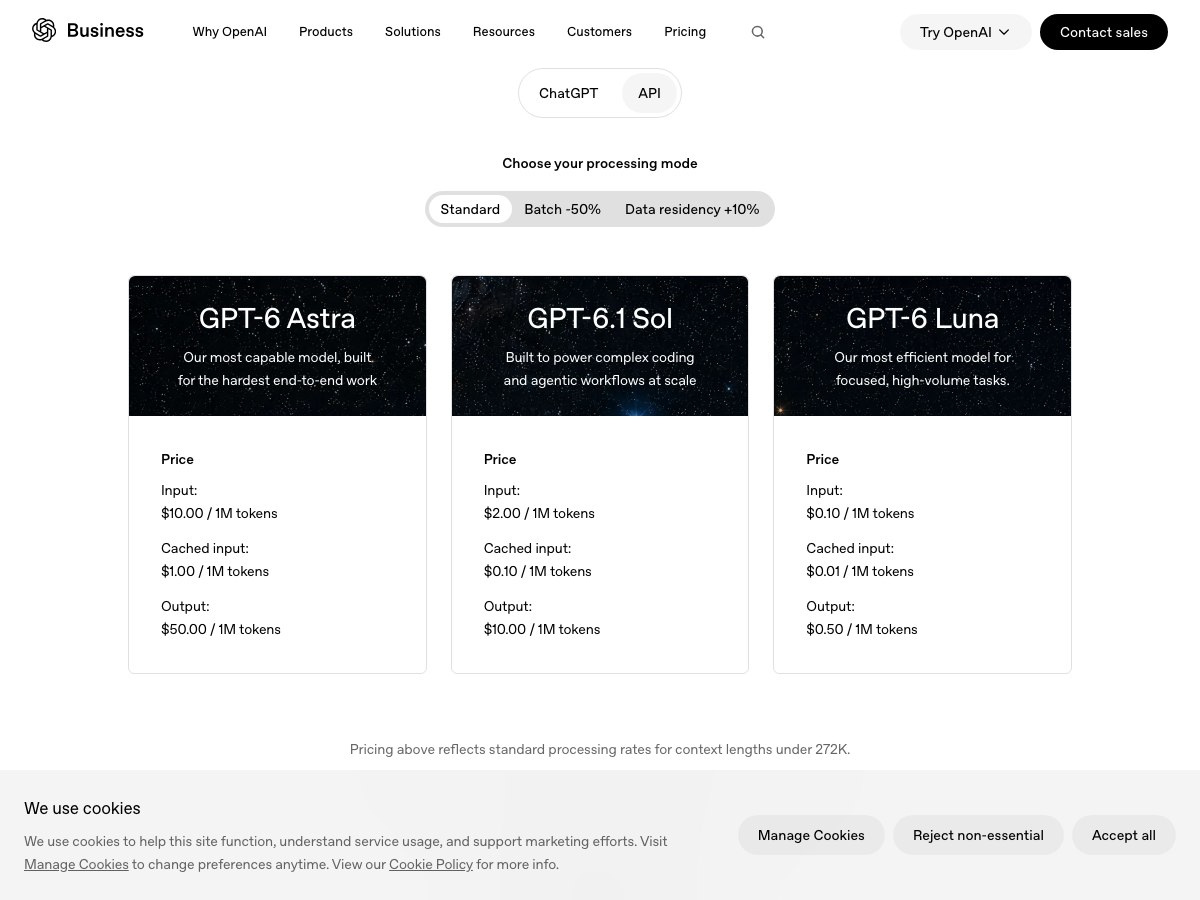
Commercial API calls scale rapidly by comparison. OpenAI standard API rates for GPT-6 Astra charge $10.00 per 1M input tokens, $1.00 per 1M cached input tokens, and $50.00 per 1M output tokens. The mid-tier GPT-6.1 Sol costs $2.00 per 1M input tokens, $0.10 per 1M cached inputs, and $10.00 per 1M outputs, while lightweight GPT-6 Luna runs at $0.10 input, $0.01 cached input, and $0.50 output per million tokens. OpenAI discounts these rates by 50% for tasks scheduled through its 24-hour asynchronous Batch API.4
Deploying internal weights avoids per-call bills. Our open model tracker lists recent NVIDIA releases such as the 5.3B parameter NV-Reason-CT, released under the openmdw-1.1 licence.5
Workload fit: when to buy 64GB, 128GB, or clusters
Choosing the right configuration depends on whether the workload centers on inference execution or model fine-tuning. A single $4,999 64GB machine delivers 1 petaFLOP of FP4 compute for running agent workflows and inference up to 100B parameters on local AI hardware tiers. However, teams requiring local fine-tuning must evaluate higher capacities: the 128GB tier is required to fine-tune models up to 70 billion parameters.123
Competing alternatives include AMD Gorgon Halo SoCs, which range from 32 GB up to 192 GB unified memory on the Ryzen AI Max+ 495 SKU. For larger architectures such as the 561B parameter Nemotron-3-Labs-Ultra-Math-RL or NVIDIA-Nemotron-Labs-Teacher-Chat, single desktop nodes are insufficient. Those models require scaling out to a 4-node 512GB DGX Spark cluster supporting up to 700B parameters.135