 3AM Marketer
AI in Test Automation: Tools, Costs, and Pipelines
Evaluating AI in test automation across commercial platforms like Applitools, mabl, and BrowserStack versus native Playwright selectors and DIY LLM generation pipelines.
In this entry
- The 4-step machine learning testing pipeline
- Native Playwright locators versus commercial auto-healing scripts
- Visual AI algorithms versus legacy pixel diffing
- Commercial AI testing tiers and quota limits compared
- Building DIY test generation with frontier LLM APIs
- Weighing high initial investment against ongoing maintenance savings
BrowserStack, which sells AI testing tools, reports that teams adopting them see up to 30% lower testing costs. It also cites research that 57% of organizations use AI-powered testing and nearly 90% plan to increase QA investments in the coming year.1
Yet adopting AI across QA operations introduces significant upfront investment and varying commercial platform expenses. Teams deciding between managed platforms like BrowserStack, mabl, and Applitools or self-hosted test suites built with AI coding tools must understand where machine learning models actively prevent brittle failures versus where standard software testing practices already suffice.234
The 4-step machine learning testing pipeline
Modern automated QA does not treat artificial intelligence as a single monolithic copilot. In practical engineering environments, test generation follows a structured 4-step pipeline that turns raw application telemetry into repeatable regression suites.2
1. Data collection: Systems gather data from application logs and user actions, such as an e-commerce platform logging user searches, cart additions, and checkout flows.2
2. Pattern recognition: Models process telemetry to identify user patterns and common system error points. For instance, detecting frequent video player pauses helps QA teams identify buffer playback errors.2
3. Automated test case generation: The engine creates test cases replicating real-world flows and edge cases, such as balancing banking ledger deposits and withdrawals under simultaneous transaction loads.21
4. Continuous learning: As code updates ship, self-learning and genetic algorithms ingest new failure patterns and user interactions, refining test cases to keep suites aligned with application changes.21
Outside of authoring, tools like Testomat.io apply machine learning directly to post-execution triage. Rather than requiring engineers to parse raw logs, their assistant explains stack traces and generates plain-language execution summaries for team members.5
Native Playwright locators versus commercial auto-healing scripts
One of the most persistent claims in AI testing marketing is that dynamic web interfaces require predictive AI auto-healing to avoid brittle script failures. However, modern open-source web frameworks already resolve dynamic DOM shifts natively through smart re-querying logic.6
Playwright re-queries an up-to-date DOM element on every single locator action. If underlying DOM nodes re-render between script calls, Playwright automatically locates the new element corresponding to the locator selector. Its recommended locators prioritize accessible, resilient web standards: page.getByRole(), page.getByText(), page.getByLabel(), page.getByPlaceholder(), page.getByAltText(), page.getByTitle(), and page.getByTestId().6
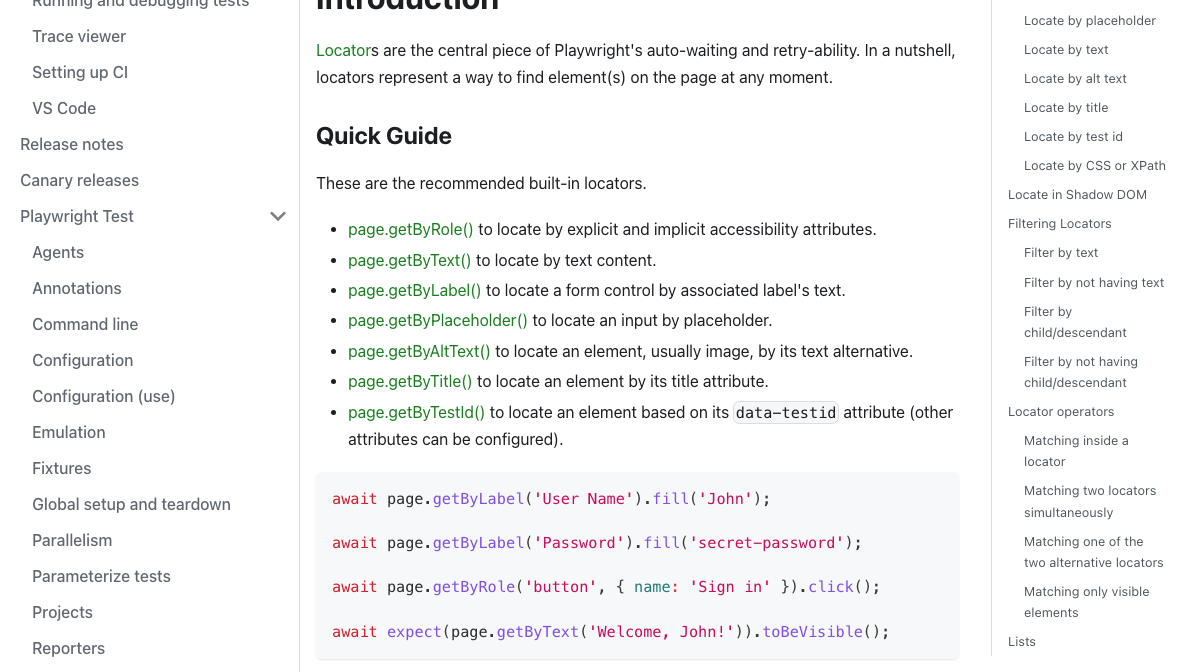
Testing by explicit test IDs remains the most resilient testing approach in Playwright because changes to user-facing copy or CSS roles will not break the test. The framework uses data-testid as its default selector attribute, which developers can customize in playwright.config.ts via the testIdAttribute configuration setting.6
In contrast, commercial test platforms package machine learning heuristics into runtime auto-healing engines. Testsigma incorporates auto-healing scripts alongside its Testsigma Copilot assistant on its Pro tier to repair broken element locators dynamically during test execution. Similarly, mabl introduced generative AI auto-healing and intelligent assertions in 2024, backing all customer plans with agentic test runtime recovery to triage failures when locators mutate.78
Visual AI algorithms versus legacy pixel diffing
Visual regression testing highlights a fundamental technical divergence between traditional image diffing and computer vision models. Legacy visual comparison tools evaluate screenshots pixel-by-pixel, causing frequent false positives over harmless anti-aliasing variations, operating system font rendering, dynamic date stamps, or minor viewport shifts.4
Modern visual testing suites substitute rigid pixel diffs with visual machine learning models. Applitools Eyes uses Visual AI algorithms designed to emulate the human eye and brain, automatically ignoring harmless environmental noise while highlighting actionable bugs across browsers and operating systems. Applitools Autonomous expands this approach by using plain English prompts to author and execute functional UI flows without manual scripting.4
BrowserStack addresses the same regression challenge through its Percy and App Percy visual testing products. By using visual AI algorithms to suppress rendering noise across real device viewports, Percy provides 3X faster review cycles for web and mobile applications compared to traditional manual review routines.3
Commercial AI testing tiers and quota limits compared
Evaluating commercial AI testing platforms requires looking past headline claims to examine monthly checkpoint quotas and parallel execution limits. Vendor plans vary significantly in how they gate automated test generation and cloud storage allowances.4783
| Platform & Tier | Published Starting Price | AI Features Included | Storage & Quotas |
|---|---|---|---|
| Testsigma Pro | Custom quote | Testsigma Copilot, auto-healing scripts | 50 GB cloud storage per parallel run, unlimited minutes, 3,000+ browsers/devices |
More on Testsigma Pro
| |||
| mabl Core Plans | 14-day free trial | Agentic runtime recovery, visual assertions, GenAI auto-healing | 500 starting monthly cloud credits, unlimited test concurrency, free local/CI runs |
More on mabl Core Plans
| |||
| BrowserStack Team | $150 / month (billed annually) | Cross-browser testing on 3,500+ combinations | 5 users, desktop & mobile combinations |
More on BrowserStack Team
| |||
| BrowserStack Team Pro | $249 / month (billed annually) | Simultaneous multi-device testing, mobile DevTools | 5 users, 4 devices simultaneously in one tab |
More on BrowserStack Team Pro
| |||
| BrowserStack Team Ultimate | $375 / month (billed annually) | Test Case Generator Agent, Percy visual overlay | 5 users, 10 PRD uploads per user per month |
More on BrowserStack Team Ultimate
| |||
| Applitools Starter | $667 / month (billed annually) | Visual AI validation, automated maintenance, RCA | Unlimited users, 100,000 component or 1,000 page checkpoints |
More on Applitools Starter
| |||
| Applitools Professional | Custom quote | AI functional testing, NLP test authoring | Starts at 150 active pages / 1,500 components, unlimited executions |
More on Applitools Professional
| |||
For developer teams managing workflows in code editors, BrowserStack provides Test Companion to run and debug tests 4X faster with agentic AI directly in an IDE. Testsigma claims a 70% reduction in testing effort across 10,000+ QA teams and 25 million executed tests, while planning upcoming autonomous testing alongside existing test case generation.73
Teams evaluating these enterprise packages should compare overall operational costs against standard AI automation services pricing limits to ensure team usage stays within allocated platform quotas.43
Building DIY test generation with frontier LLM APIs
Rather than licensing monolithic enterprise platforms, engineering teams increasingly construct custom test authoring pipelines by piping application logs, OpenAPI definitions, or PRD documents directly into frontier LLM APIs. Understanding token costs is critical when choosing an execution model for autonomous AI agents runtimes costs.910
OpenAI API pricing reveals a substantial 100x cost spread across model tiers. GPT-6 Astra charges $10.00 per 1 million input tokens, $1.00 per 1 million cached input tokens, and $50.00 per 1 million output tokens. In comparison, GPT-6.1 Sol costs $2.00 per 1 million input tokens, $0.10 for cached inputs, and $10.00 per million output tokens, while GPT-6 Luna costs $0.10 per million input tokens, $0.01 for cached inputs, and $0.50 per million output tokens.910
According to the 3AM Marketer LLM API pricing timeline tracking data captured on 2026-10-13, running a blended workload of 1 million input tokens and 1 million output tokens costs $0.60 on OpenAI GPT-6 Luna, whereas the identical volume on GPT-6 Astra costs $60.00. That is a 100 times cost disparity between the two models.10
Executing asynchronous test generation batches reduces expenses further. The OpenAI Batch API provides a 50% discount on inputs and outputs for tasks completed within 24 hours. For automated pipelines that execute generated test code in sandbox environments, OpenAI containers cost $0.03 for a 1 GB container and $1.92 for a 64 GB container, while external Web search tool queries cost $10.00 per 1k calls with search content tokens provided for free.9
Weighing high initial investment against ongoing maintenance savings
Adopting AI in automated testing delivers tangible downstream operational returns, but the transition requires significant initial investment. TestDevLab emphasizes that while AI provides high accuracy and speed, organizations face technical complexity and a strong dependency on good data.2
When interaction datasets or DOM traces are sparse or poorly structured, synthetic test case generation struggles to isolate meaningful user flows. However, when teams pair disciplined application instrumentation with self-learning algorithms, BrowserStack reports up to 30% lower testing costs and noticeably accelerated release cycles across their continuous integration pipelines.12
QA leaders should evaluate their core automation bottleneck before buying vendor tools. If test failures stem from dynamic DOM shifts, enforcing Playwright getByTestId locators in application repositories solves stability natively without third-party fees. When visual UI regressions or manual PRD translation consume QA resources, visual AI engines like Applitools and Percy or batch LLM generation pipelines offer quantifiable cost reductions.4639