 3AM Marketer
Context Engineering Cuts Agent Intake Tokens 95%
Context engineering shifts LLM design from prompt crafting to architectural resource control. Reference designs cut token intake by 95% and isolate agent context windows.
Context engineering cuts the tokens added to an agent's context by approximately 95% when substituting multi-step script loops with a single write-and-execute tool. Context engineering is defined as the discipline of optimizing information within a large language model's limited context window so autonomous agents perform at their best.1
Unmanaged systems rapidly saturate model capacity. A standard data analysis and report generation workflow consumes over 150K tokens across 15 minutes when run without structural boundaries.1
Treating the context window as RAM
Andrej Karpathy formulates the core computing model: the LLM is the CPU, and the context window is the RAM. Because working memory is finite, filling it with unparsed artifacts degrades execution. Developers currently patch context limits by chunking long documents into bite-sized pieces, using vector search to pull snippets, or chaining prompts to remind the model of earlier steps.23


In large organizations, pairing proper llm context management with modern coding copilots is associated with a 26% increase in completed software tasks. Long-running tasks, however, require architectural intervention rather than superficial prompt reminders.2
The four layers of context engineering
The reference architecture structures operational controls across four layers: Architecture isolates context, Prompt controls intake, Tools externalize files to the filesystem, and Verification applies independent safeguards.1
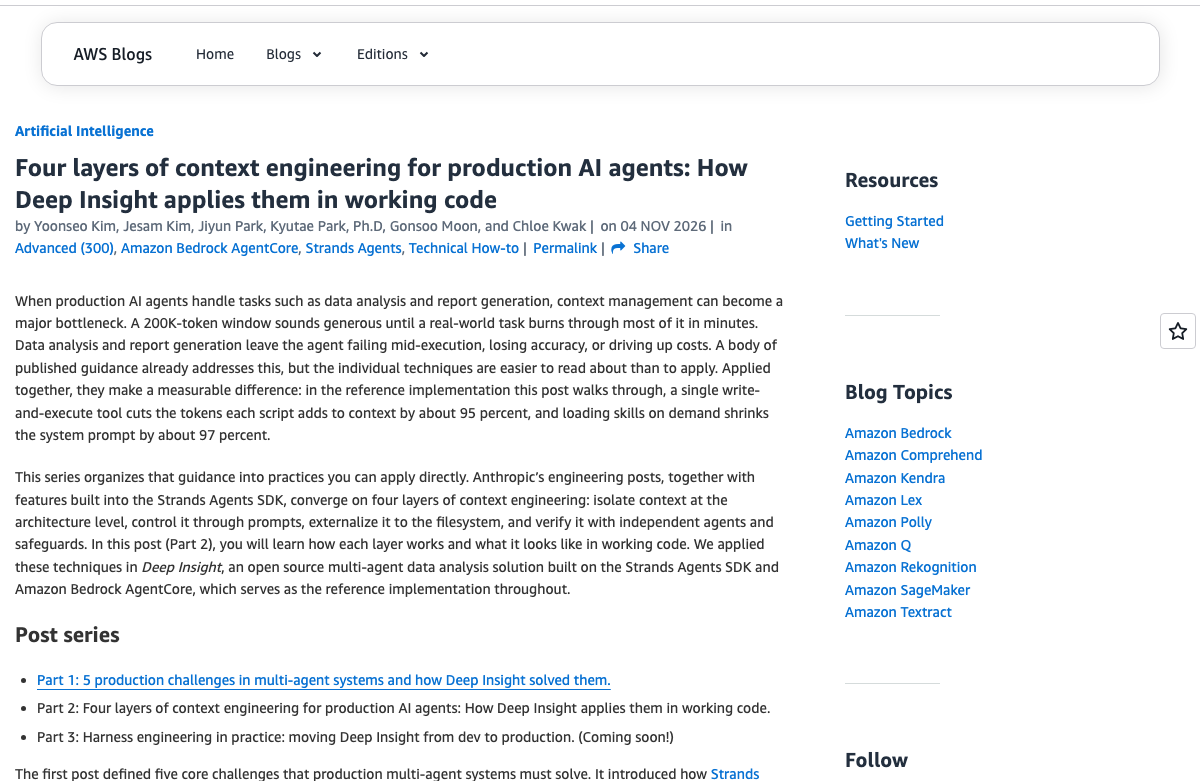
Loading agent skills on demand within this hierarchy shrinks the system prompt by approximately 97%. Rather than stuffing every capability into persistent instructions, on-demand loading protects working memory until specific tools are needed.1
Budgeting tokens for multi-agent workflows
Production deployments like Deep Insight demonstrate how isolating context across specialized agents keeps even the Coder under 25K tokens total. Pairing role isolation with strict execution limits and targeted agent orchestration prevents conversational bloat across runtime cycles.1
| Agent Role | Recommended Output Token Budget |
|---|---|
| Coder | 1,000 to 1,500 tokens |
| Validator | 800 tokens |
| Reporter | 1,000 tokens |