 3AM Marketer
AI and Robotic Process Automation: Costs and Architecture
A technical breakdown of deterministic RPA runners versus probabilistic LLM APIs, comparing Power Automate and UiPath seat costs with token usage economics.
Robotic process automation executes deterministic, rule-based tasks across user interfaces, whereas artificial intelligence processes unstructured information using probabilistic models. Thinkowl, which sells a combined RPA and AI product, says pairing them can eliminate up to 70% of process costs, with RPA handling legacy interfaces while AI interprets up to 99% of pertinent specialized data.12
Deciding between robotic automation, language model APIs, or hybrid setups comes down to your integration surface and cost structure. Fixed enterprise bot runners charge predictable monthly fees per seat or virtual machine, whereas modern autonomous AI agents runtimes costs fluctuate based on token throughput and container runtime sessions.34
Deterministic UI runners versus probabilistic models
Traditional RPA bots mimic human interaction by executing repetitive steps through existing software interfaces, such as data entry, data extraction, form filling, and report generation. These deterministic workflows follow rigid, predefined sequences and require general software development skillsets, allowing organizations to deploy working pipelines within weeks or months.1
In contrast, artificial intelligence models operate on probabilistic inferences rather than hardcoded logic. Applying AI to complex automation flows requires data science skills and complex algorithms, but it allows systems to interpret variable documents and unstructured data that break traditional UI scripts. When complex enterprise processes stall due to messy inputs, AI models can interpret the data before handing clean values back to deterministic runners.12
When to deploy RPA alone on legacy systems
Pure RPA remains the most practical mechanism for high-volume, simple processes involving structured data when dealing with legacy enterprise systems where direct API integration is not feasible. If an internal database or terminal application lacks webhooks or REST endpoints, desktop robotic scripts interact directly with on-screen fields to move data without rewriting backend infrastructure.1
However, running RPA alone introduces strict infrastructure constraints. For instance, a single Power Automate bot assigned to a machine can execute only one unattended desktop flow run at a time. Teams executing multiple concurrent desktop workflows on the same operating system instance must license and provision separate bots for each parallel execution queue.3
The economics of RPA platforms: Power Automate and UiPath
Fixed RPA platform licensing splits between attended user seats, unattended execution machines, and enterprise testing tiers. Microsoft structures Power Automate around desktop and cloud flows, while UiPath provisions tiered team plans with strict user and robot caps. Understanding these base tiers prevents unexpected runtime expansion costs when scaling automation programs alongside AI automation services pricing limits.35
| Platform Plan | Base Price | Included Units | Storage & Concurrency Entitlements |
|---|---|---|---|
| Power Automate Process | $150.00 / bot / month | 1 unattended bot | 1 desktop flow run at a time; 50 MB DB, 200 MB file |
More on Power Automate Process
| |||
| Power Automate Hosted Process | $215.00 / bot / month | 1 Microsoft-managed Azure VM | 1 desktop flow run at a time; 50 MB DB, 200 MB file |
More on Power Automate Hosted Process
| |||
| UiPath Basic | Starting at $25 / month | Up to 5 Basic, 5 Plus, 1 Pro User | Limit of 2 robots; 6 months cold data |
More on UiPath Basic
| |||
Scaling enterprise automations within UiPath requires factoring in proprietary testing and resilience add-ons. UiPath Test Cloud offers Performance Testing priced at $20K for 2,500 VUs, Screenplay at $10K for 50K runs, and Self-Healing at $5K for 5K heals. In addition, UiPath Test Cloud Enterprise provides basic connectors with one included Planview connector for ALM integrations and charges +$5K per additional connector, with cold data retention capped at 6 months on Basic, 2 years on Standard, and 5 years on Enterprise.5
Bridging RPA with LLM APIs and computer use tools
Integrating generative language models into classic automation loops removes the rigidity of rule-based systems. Bots no longer crash when document formats change. Rather than maintaining custom regex or OCR logic, teams pass extraction workloads directly to REST API endpoints, routing between fast inference models or high-capability reasoning layers based on complexity.24
Based on our tracking of token prices by model, GPT-6 Luna costs $0.10 per million input tokens, $0.01 per million cached input tokens, and $0.50 per million output tokens. Conversely, GPT-6 Astra charges $10.00 per million input tokens, $1.00 for cached inputs, and $50.00 for outputs. In between, GPT-6.1 Sol runs at $2.00 input, $0.10 cached input, and $10.00 output per million tokens, while asynchronous workflows running over 24 hours cut input and output costs by 50% through the OpenAI Batch API.46
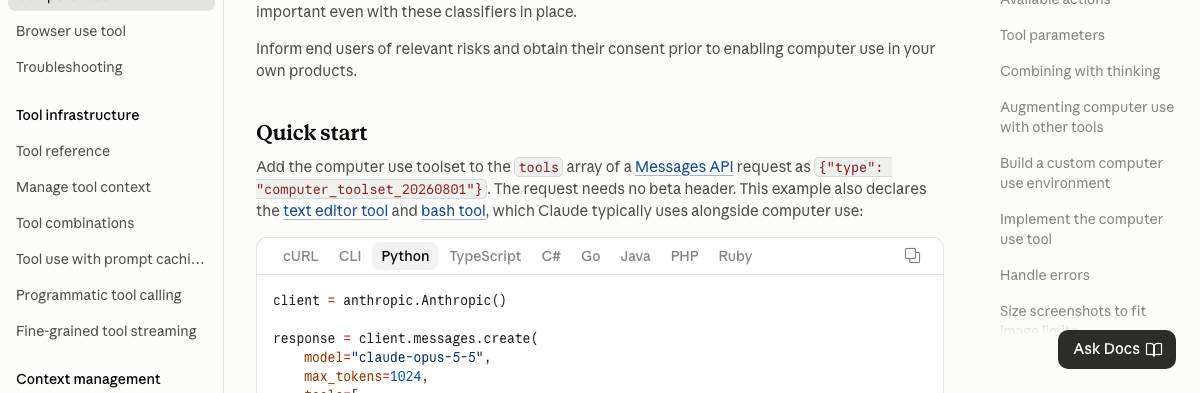
Auxiliary agent execution also incurs separate API tooling charges. OpenAI Web search costs $10.00 per 1,000 calls while search content tokens remain free, and Container execution costs $0.03 for 1 GB up to $1.92 for 64 GB per 20-minute session. Modern implementations also use visual AI desktop agents instead of DOM scrapers. Anthropic Claude computer use enables direct UI actions through the computer_toolset_20260801 client toolset, giving Claude 17 member tools including screenshot, left_click, type, and zoom. When executing desktop actions, the model returns a stop_reason of tool_use with member blocks carrying toolset_name computer, while automated classifiers continuously scan screenshots to flag potential prompt injections.47
Deciding between fixed runners and API token loops
Choose standalone RPA runners like Power Automate Process ($150 per bot monthly) or UiPath Basic ($25 monthly) when workflows rely purely on static layouts, structured Excel spreadsheets, and non-API legacy desktop systems. If process volumes are predictable and logic rarely shifts, fixed machine licensing provides a hard cost ceiling.35
Introduce LLM APIs when workflows stall on unstructured formats, varied invoice layouts, or subjective validation. Teams can inspect workflows with a Zapier AI automation setup or direct SDK scripts, sending variable document text to GPT-6 Luna at $0.10 per million input tokens before routing structured outputs back to single-machine RPA runners. When legacy interfaces cannot expose selectors at all, Anthropic Claude computer use toolsets provide a dynamic fallback, provided automated classifiers inspect execution frames for injection vulnerabilities.467