 3AM Marketer
Zapier AI Automation Limits, MCP, and Model Costs
Zapier runs AI workflows, Agents, and Model Context Protocol connections through a single shared task pool. Here is how platform limits and frontier model costs compare.
Zapier AI automation executes workflows, agents, and external tool calls through a single shared account bucket where every successful action step consumes tasks. Rather than charging separate fees for reasoning loops, Zapier meters standard Zaps, native AI prompt steps, Code by Zapier, and Model Context Protocol actions from that exact same allotment.12
Teams evaluating no-code AI agent builders often overlook execution latency and operational caps. The platform connects to more than 9,000 apps, but tier limits dictate whether an automated pipeline succeeds or fails under production loads.13
The three components of Zapier AI automation
Native execution splits across AI by Zapier, Zapier Agents, and Zapier Chatbots to balance structured logic and reasoning. AI by Zapier operates as an action step within linear workflows, running prompts against incoming data through an OpenAI-powered model without requiring an external API key.4
For non-linear tasks, Zapier Agents provides a chat interface where users give natural language instructions to browse the live web, trigger actions across connected software, and complete multi-step reasoning tasks. While Agents handles internal team operations, Zapier Chatbots runs conversational interfaces designed for customer-facing discussions.43
According to pricing tracking data, both Zapier Agents Free and Zapier Chatbots Free start at $0 a month billed monthly, allowing teams to test internal assistants before connecting them to broader workflow budgets.5
One shared bucket: the mechanics of Zapier task consumption
A task in Zapier is counted strictly when an action step is successfully completed. If a trigger fires but downstream steps halt, or if a filter stops a pipeline, no task is billed against the account quota.2
Workflows, AI steps, Code by Zapier, Model Context Protocol actions, and custom SDK executions all draw from the same task allocation without separate product allowances. How quickly a team burns through its allotment depends on three operational variables: the AI model tier selected, the code runtime consumed, and the specific connector type executing the work.1
Because multi-step reasoning loops can run dozens of underlying calls, uncontrolled pipelines risk rapid exhaustion without proper oversight. Teams scaling multi-step pipelines can implement safeguards similar to AI agent budget caps to enforce limits before downstream task allocations expire.12
Platform tier limits from Free to Enterprise
Platform features scale significantly across pricing tiers. The Free tier costs $0 a month billed monthly and includes 100 tasks per month, but limits workflows to two-step Zaps, meaning a trigger can only execute a single subsequent action.15
The Professional plan starts at $19.99 per month billed monthly, unlocking multi-step Zaps containing multiple actions, filters, or search steps. Teams paying yearly receive a 33% discount. Professional introduces Autoreplay, which automatically retries failed steps caused by temporary downtime or network errors, and adds Live Chat support starting at the 2,000 task tier.125
The Team plan starts at $69 per month billed monthly and includes 25 users. Polling frequencies tighten as plan tiers rise: the Free plan checks for new data every 15 minutes, the Professional plan polls every 2 minutes, and Team and Enterprise check every 1 minute. Triggers labeled Instant bypass polling limits entirely and fire immediately across all tiers.125
Custom scripts built with Code by Zapier face rigid execution ceilings. Free accounts allow 1 second of runtime per step, Professional and Team increase the ceiling to 30 seconds, and Enterprise provides 2 minutes per step. Enterprise also provides automatic AI model opt-out, ensuring proprietary data is excluded from model training routines.16
Connecting external models through Zapier MCP and 66,000 actions
Zapier MCP implements the Model Context Protocol, allowing third-party frontier clients to run external actions without custom API bridges. The protocol connects AI tools to applications across 66,000 triggers and actions with granular user permissions.6
This setup establishes a single connection between more than 9,000 apps and developer tools including Claude, ChatGPT, Cursor, and 230 other AI tools. Practitioners designing custom logic inside building AI agents frameworks can offload tool definitions to Zapier MCP rather than writing bespoke webhook handlers for every software integration.16
API token economics: when native AI steps beat custom calls
Teams deciding whether to use built-in AI by Zapier steps or run raw webhook calls to model providers face wide cost variations. OpenAI frontier pricing demonstrates a massive pricing spread between model tiers.78
OpenAI GPT-6 Luna costs $0.10 per 1M input tokens ($0.01 cached) and $0.50 per 1M output tokens, totaling $0.60 for 1 million input plus 1 million output tokens. In contrast, OpenAI GPT-6 Astra costs $10.00 per 1M input tokens ($1.00 cached) and $50.00 per 1M output tokens, totaling $60 for the same volume, exactly 100 times as much. OpenAI GPT-6.1 Sol sits in the middle at $2.00 input, $0.10 cached input, and $10.00 output per 1M tokens.78
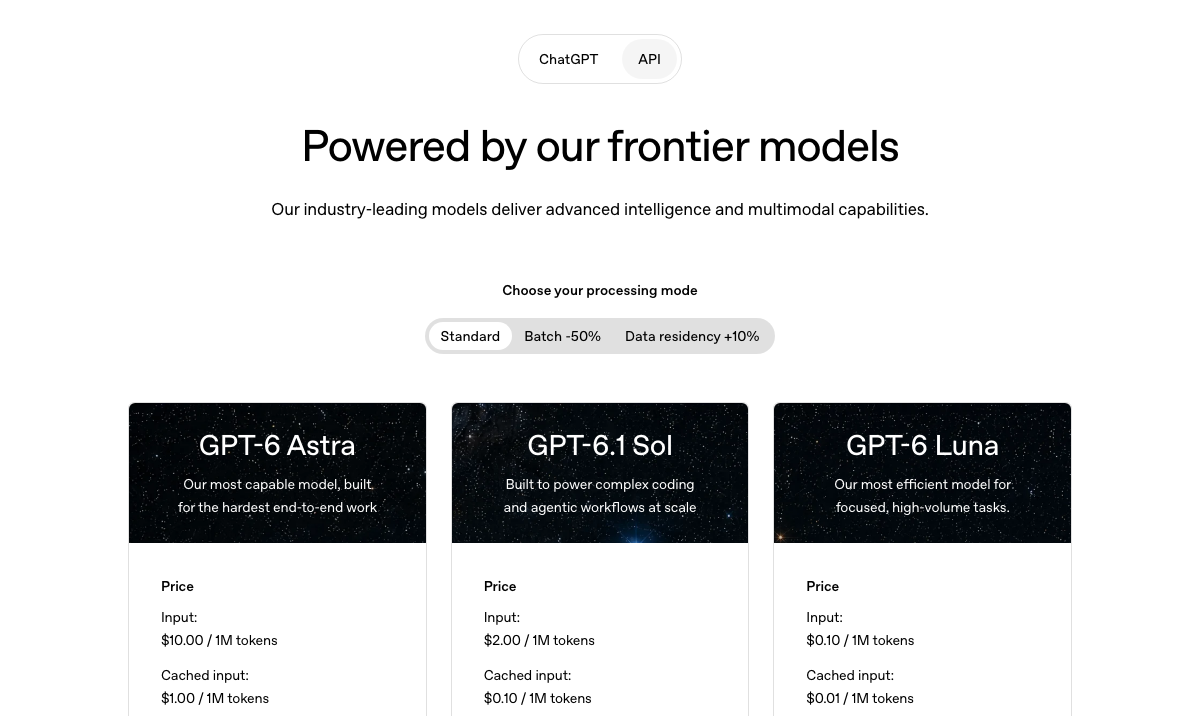
These standard processing rates apply for context lengths under 272K. Adding autonomous capabilities introduces secondary tool fees: OpenAI charges $10.00 per 1k calls for its Web search tool, while search content tokens are free. Containers cost $0.03 for 1 GB and $1.92 for 64 GB per container per 20-minute session, a pricing structure in place since March 31, 2026. Teams handling asynchronous workloads can reduce costs by using the Batch API, which offers a 50% discount on inputs and outputs over a 24-hour turnaround.7
When tasks require heavy multi-step reasoning, external agent loops calling Astra can cost substantially more than standard workflows. For basic extraction or formatting, native AI steps bundled into standard task buckets avoid API management overhead.178
Enterprise throughput numbers in production
Production deployments demonstrate high operational volume across enterprise environments. At Mercari US, 47,000 customer tickets are resolved entirely by Zapier each month, freeing over 3,000 agent hours from manual support queues.6
Palo Alto Networks reports saving $150,000 annually pretax using Zapier workflows across more than 3,000 internal users. In IT security, Okta reduced credential rotations from a full-day, multi-person process to 2 hours while automating 13% of its Workforce Identity escalations.6
Top-of-funnel lead generation shows similar scale. Using Zapier Agents, software company Slate deployed an AI agent that generated over 2,000 leads in a single month.9
Deciding on an automation stack comes down to latency tolerances and structural limits. Choose the Free plan only for two-step prototypes that tolerate 15-minute polling delays and 1-second script runtimes. Upgrade to Professional at $19.99 per month when multi-step logic and Autoreplay are required, or to Team at $69 per month when workflows require 1-minute execution loops across 25 team members. If internal pipelines require heavy reasoning across thousands of tokens, calculate direct GPT-6 Luna API costs before committing high-volume agent loops to shared task buckets.1258
Questions
Is Zapier AI free to use?
Zapier provides a Free plan that includes 100 tasks per month, two-step Zaps, and access to basic tables and forms. Zapier Agents Free and Chatbots Free tiers are also available at $0 per month billed monthly, though multi-step Zaps require a paid tier.
How much does Zapier AI cost?
Zapier pricing starts at $0 for the Free tier, $19.99 per month for Professional, and $69 per month for the Team plan with 25 users when billed monthly. Annual billing reduces paid plans by 33%.
How does Zapier count task usage for AI actions?
Tasks are counted only when an action step completes successfully. Zap workflows, AI steps, Code by Zapier, Model Context Protocol actions, and SDK calls all pull from a single shared account task bucket without separate allowances.